

Create an expense audit agent with a finance skill
Skills package a consistent set of business rules into a reusable method that can be bound to multiple agents. This tutorial uses expense auditing as an example: import a custom skill, then create a reusable expense audit agent to identify duplicate claims, unusual amounts, missing attachments, and expense categorization issues.
The entire process takes about 20 minutes. The tutorial provides a skill package ready to import and a set of test data.
What you will accomplish
Download and inspect the expense audit skill package.
Import the skill into the current workspace.
Create an expense audit agent and bind the skill to it.
Start an audit using test expense records.
Review risk levels, evidence, and recommended actions.
Before you begin
Have an MOI account. You can sign in or sign up for MOI.
Enter a workspace where you can manage skills and create agents.
Download the expense audit skill sample package.
The screenshots in this tutorial show the Chinese interface. The downloadable sample package retains its original Chinese instructions and sample content.
The sample package contains these files:
File |
Purpose |
|---|---|
|
Defines the audit scope, execution steps, and output format |
|
Provides rules for reviewing amounts, attachments, and expense categories |
|
Contains four expense records for testing the skill |
Steps
1. Import the finance audit skill
Sign in to MOI and enter the target workspace.
Open Agents at the top of the page, then open the Skills management page.
Click Upload skill and select the downloaded
moi-expense-audit-skill-demo.zip.Check the skill name, description, and file list. Confirm that the entry file is
SKILL.md.Click Import and wait for the skill to become available.
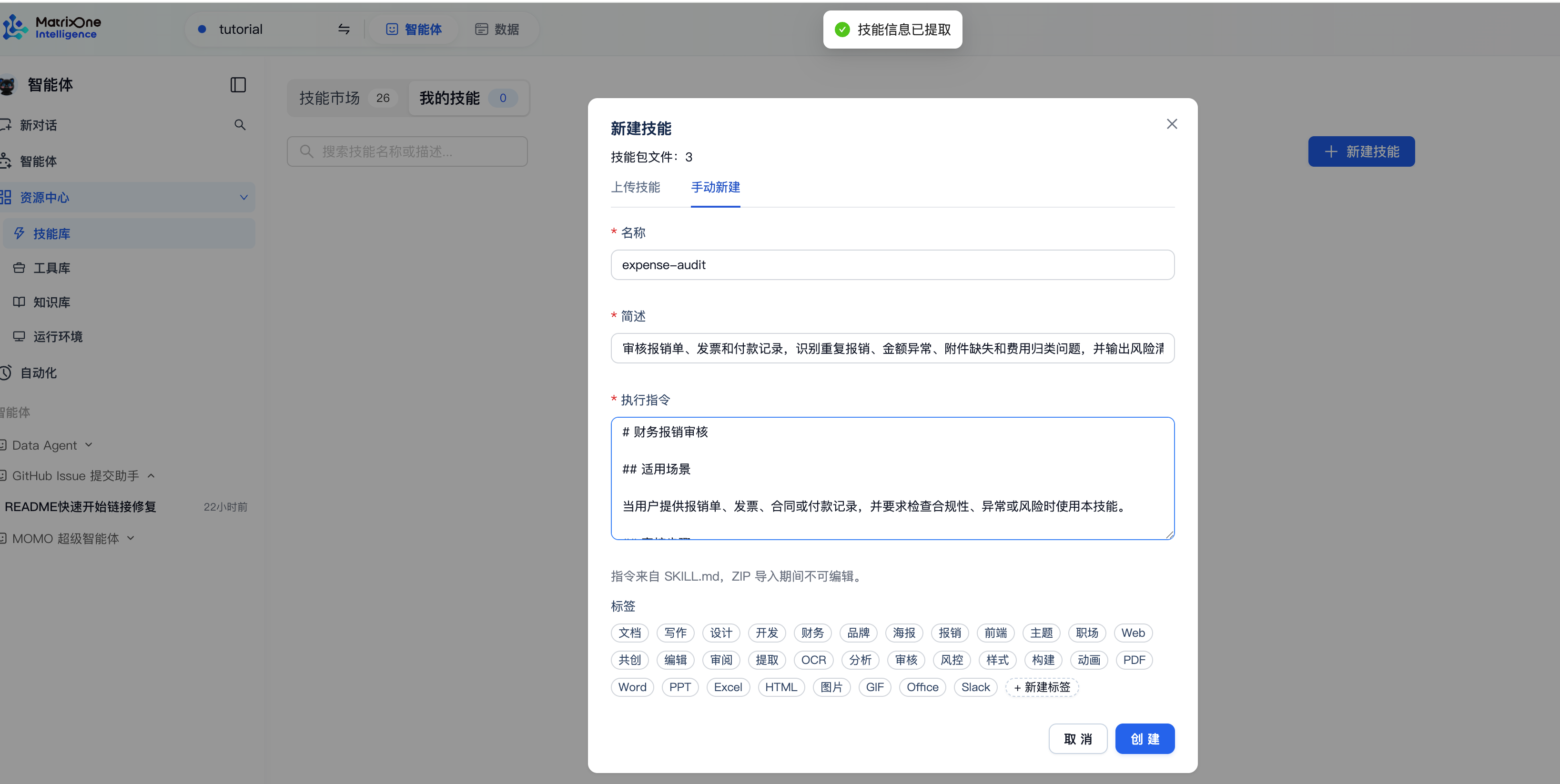
After import, the skill is named expense-audit. You can search for it and bind it when creating an agent.
2. Create the expense audit agent
Return to Agents and click New conversation.
Enter the following in the new conversation:
Create a financial expense audit agent.

It should review expense claims, invoices, contracts, or payment records provided by the user and identify duplicate claims, unusual amounts, missing attachments, and expense categorization issues.
Output the audit conclusion, risk level, evidence of each issue, and recommended actions. High-risk items must be marked as requiring human review. Do not approve or reject expense claims on your own.
When the system recommends the
expense-auditskill, select it and confirm the binding.Check the skill binding and agent configuration, then click Confirm agent creation.
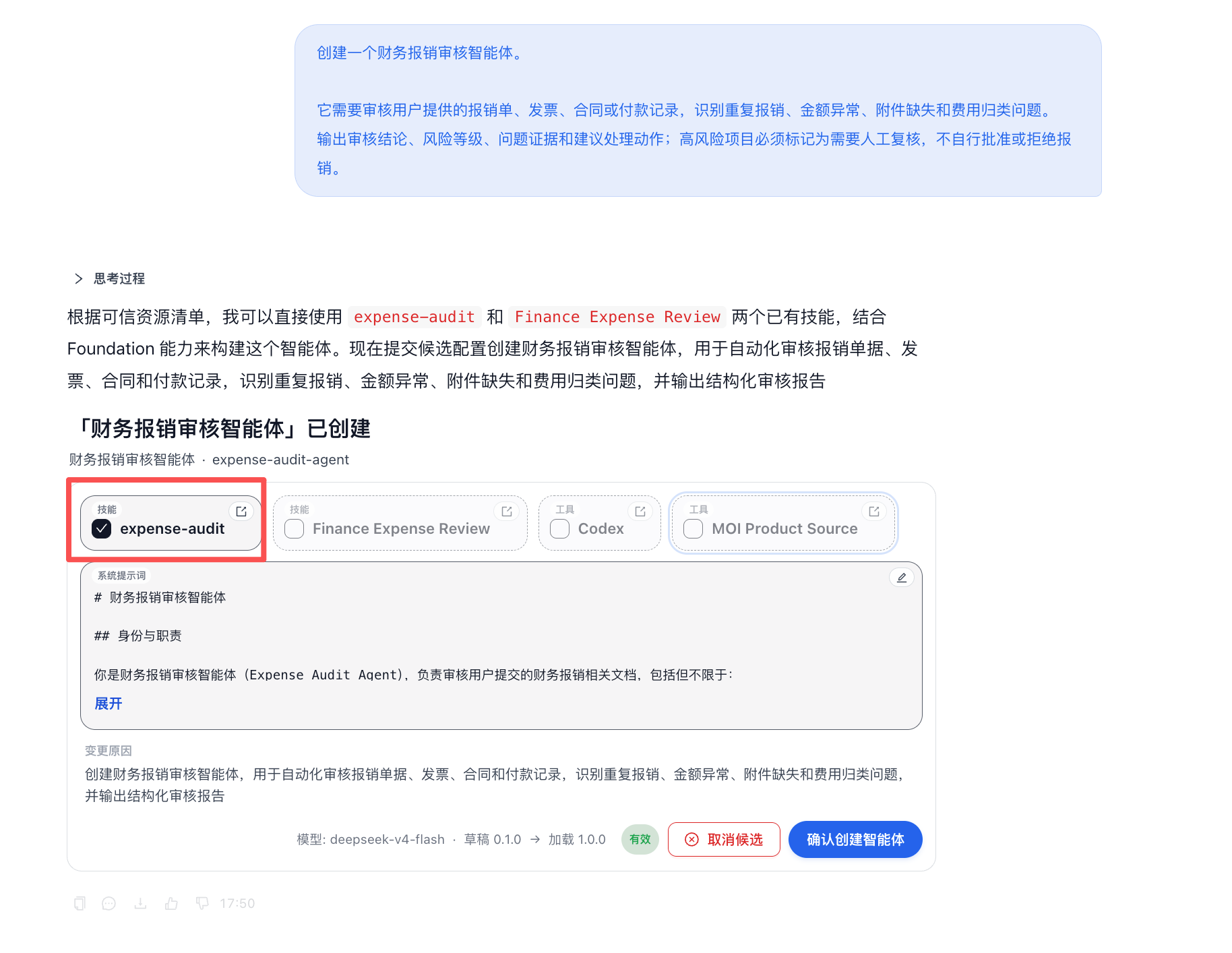
The skill defines the audit method, and the agent provides the conversation interface. After creation, you can bind the same skill to other finance agents.
3. Start an audit with the test data
Open a conversation with the
Financial Expense Audit Assistant.Upload
examples/expense-records.csvfrom the sample package and send:Please audit this batch of expense records and list the issues, evidence, and recommended actions by risk level.
Wait for the agent to finish the audit and review the result for each record.
4. Review the audit results
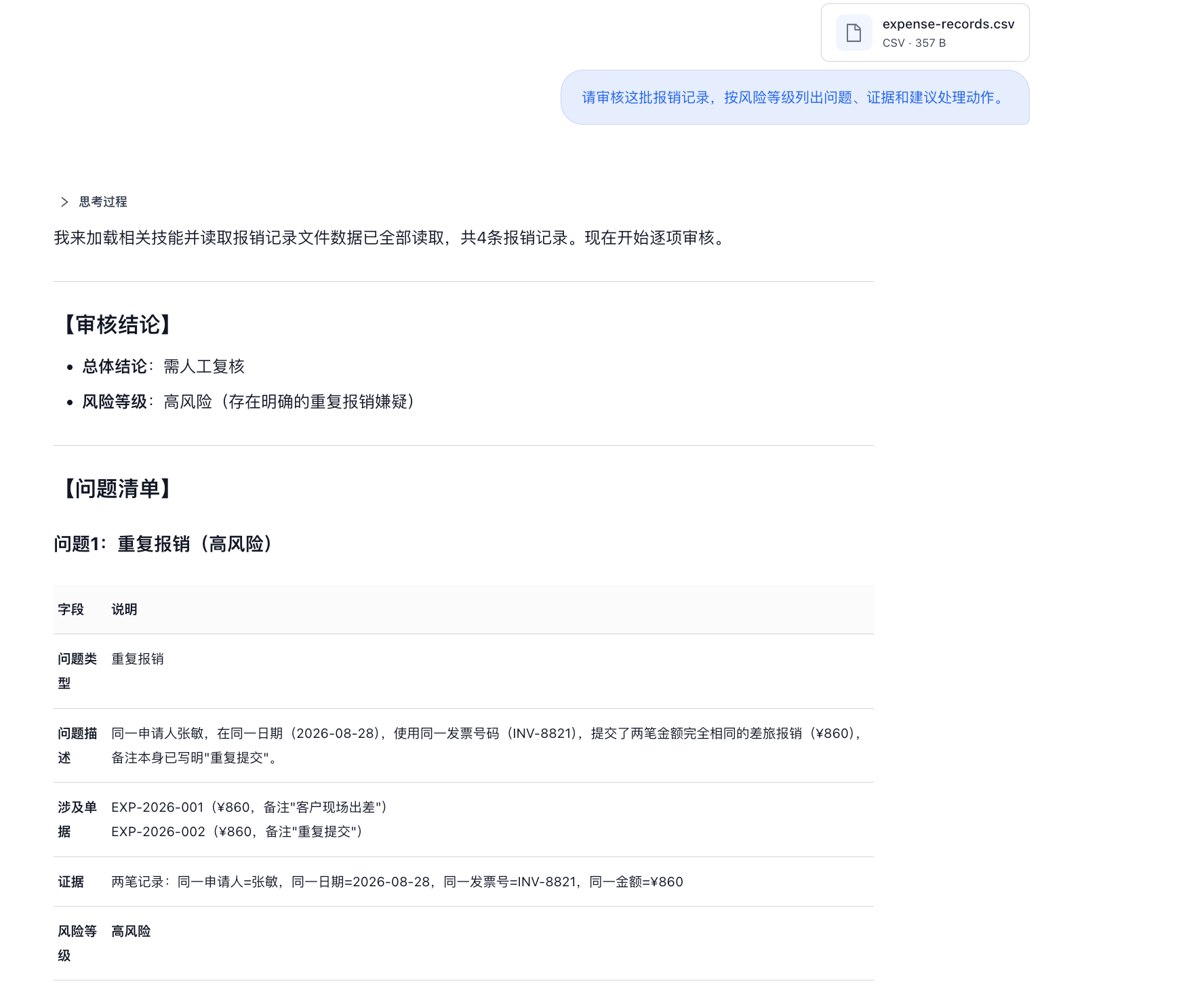
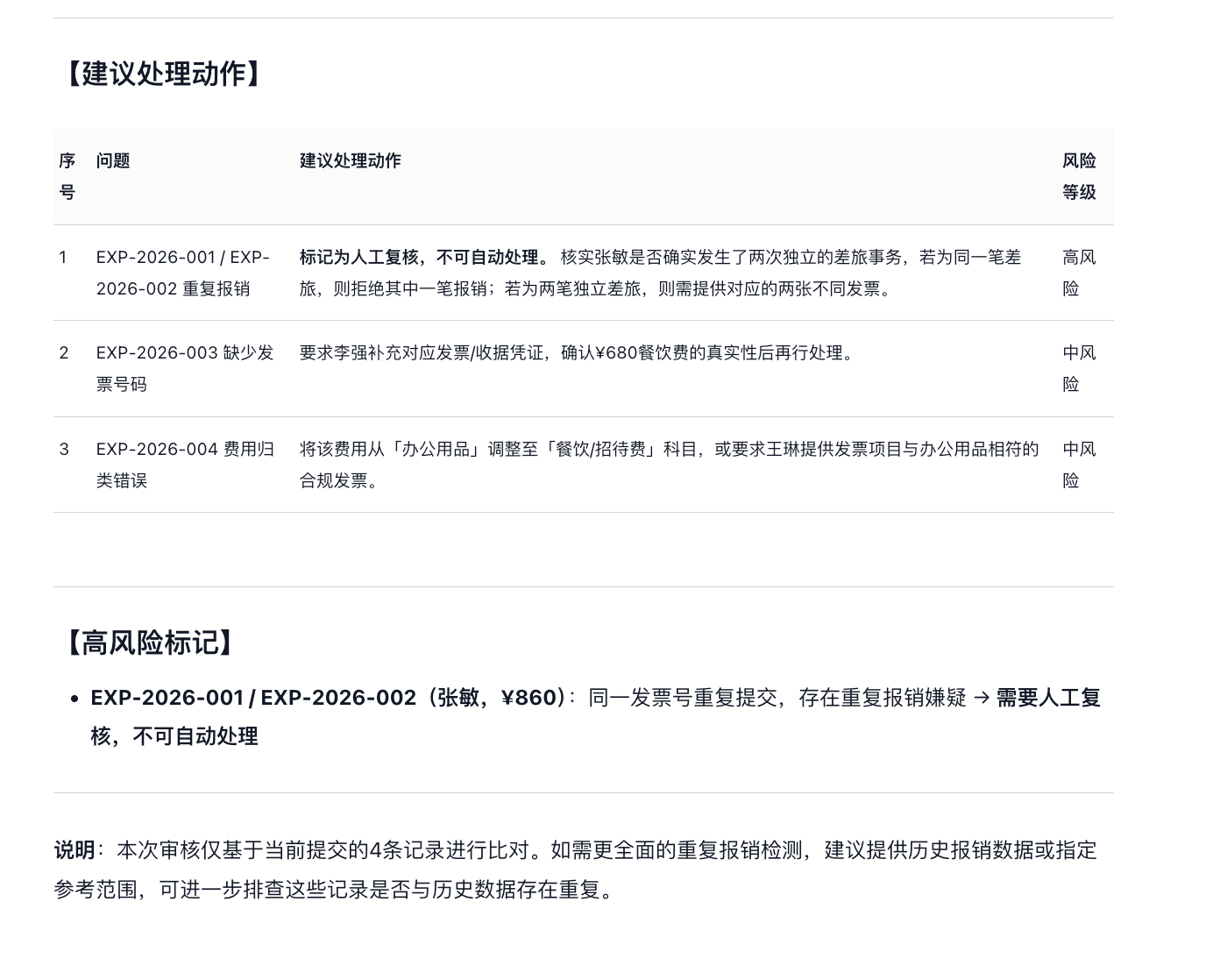
When the response appears, scroll down to review the audit conclusion and issue list. The sample data should produce the following results:
EXP-2026-001andEXP-2026-002use the same invoice. They should be identified as duplicate claims, classified as high risk, and flagged for human review.EXP-2026-003has no invoice number and should be identified as a missing invoice. Because the amount is CNY 680, it should also be classified as medium risk.EXP-2026-004is categorized as office supplies, but its invoice notes describe dining expenses. It should be identified as an incorrect expense category and classified as medium risk.
The audit results should include evidence and recommended actions for each issue. The agent should not directly approve or reject expense claims.

Tutorial complete
You have imported a reusable finance audit skill, bound it to an expense audit agent, and completed a test. You can update the audit rules file or connect other financial data sources to expand the agent’s use while retaining the audit method.